
Time flies and it cannot be stopped, slowed down or reversed.
(3 mins read)
Drawing by boradoodles.pl
What would you do if you had more time? What would you do more of? Would you get some more rest? Or would you spend your extra time going deeper into problems and tasks which you are working on?
Having more time would give us a lot of possibilities. We could enjoy more time with our family and friends, enjoying your hobbies or even delivering professional activities with a higher quality!
To create extra time in your daily routine, it’s important to develop habits that optimize our productivity, eliminate time-wasting activities, and make the most of the time we have.
We are going to share with you our own techniques of being more efficient with your time which we have developed over many years of professional practice.
DEVELOP DAILY ROUTINE
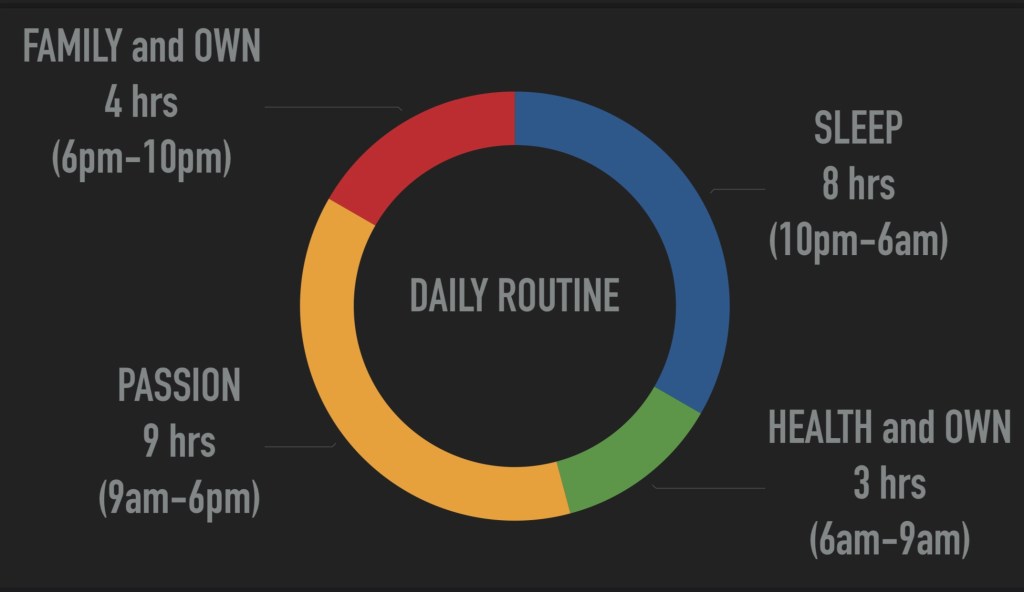
Daily routines provide a sense of structure and stability, which helps us navigate through the day and maintain a sense of control and balance. Routines establish healthy habits and allow us to make consistent progress towards our goals, whether they are related to work, personal development, or overall well-being. When we plan we could allocate time for our private life and professional activities. By following a daily routine, we can optimize our time, increase productivity, and reduce decision fatigue, allowing us to focus on what truly matters and maximize our potential for success. Below there is an example of a standard daily routine.
IDENTIFY YOUR FOCUS AREA
Firstly, you need to know your priorities. It is critical to know why and how you’re going to pursue a certain activity. There is no point of starting any activity if it isn’t linked to any of your key focus areas. Whatever you do, it has to bring you closer to achieving your goals! Start each day by identifying your top priorities and creating a clear plan of action. This helps you focus on what truly matters and prevents you from wasting time on less important tasks. Avoid procrastination when completing tasks linked to your priorities. Below there is a simple technique which will help you to identify critical tasks you need to FOCUS on:

LEARN TO SAY “NO”
Develop the habit of saying no to tasks or commitments that don’t align with your priorities or add value to your life. It’s important to set boundaries and protect your time to avoid overcommitting yourself. You are not going to be rude, you will be assertive.
SMART TASKING
Analyse your daily activities and combine some of them. Does it sound crazy? Absolutely not, it is an easy way of recycling a few hours daily.
Do you exercise? I am almost sure that you listen to music whilst exercising. Next time try to listen to… an audiobook! Your one hour of running would be actually one hour of running + one hour of listening to an interesting book! So 1 hour becomes 2 hours!
Another idea. Next time you go out for lunch, ask a person from your project team to have lunch together and discuss some business-related topics you’re struggling to solve.
Still not convinced? If you drive to work, try and plan some calls for your commute. It could even be a daily catch-up call with your team or your manager. Maybe, there is something that you need to discuss with your project team members – call them during your commute!
Reflect on your daily activities – which ones can be combined or modified? Find them now!

REFLECT, ANALYSE AND IMPROVE
When my colleagues and I call to reflect on our day of business, we spend a few minutes on reflections – what has been achieved and what hasn’t? Have we made any mistakes today? Are there any lessons for the future? We ask these questions, and then we finish off by briefly reviewing all meetings and activities scheduled for the next day. A short summary of your day will help you to reflect on those activities – were there any challenges? Is there any data or information missing from the table? This quick action will ignite your subconscious mind as well. In the evening and at night whilst you sleep, your mind will connect some of the dots and will work hard to help you in finding the solutions to your questions and/or problems.
The next morning, find yourself 15-30 minutes to go through your daily plan and run a detailed preparation for each meeting, call or activity. This quick and simple technique will boost your effectiveness, since you’ll have planned ahead and will be prepared. There will be no call or meeting without a clear agenda. I’m sure you would need up to one hour to conclude each meeting or to solve any complicated problems.
LIMIT DISTRACTIONS
Identify and minimize sources of distraction in your environment. Turn off notifications on your phone, close unnecessary tabs on your computer, and create a quiet workspace to help you concentrate better and accomplish tasks more efficiently. You can develop your own playlist which will help you to concentrate or you could use the Spotify Playlist prepared by the Every-Day-Development Team:
ELIMINATE TIME THIEVES
We are surrounded by many time thieves. Social media, TV, music and movie streaming services or even video games tempt us every minute and everywhere. Every one of us has a 4G connection and we all know how easy it is to spend a couple of hours browsing the internet or watching yet another season of your favourite TV series. I am not saying to not do that. You need to be a conscious consumer and, for example, spend 30 minutes on social media everyday instead.
Now it is up to you what do you want to do about your time. Do you want to continue as it is or based on this read you are going to analyse, reflect and start changing your behaviours.
Remember that developing new habits takes time and effort. Start by incorporating one or two habits at a time into your routine, and gradually build upon them. Consistency and persistence will help you create extra time in your day and make the most of each moment.
 Every Day Development