(4 mins read)
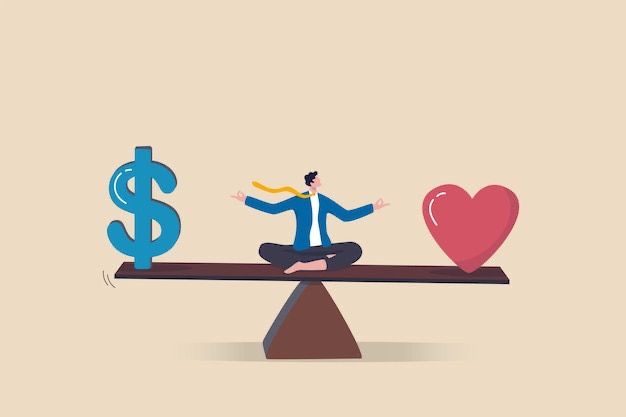
In the continues dance between personal life and a professional career, achieving life-work harmony is the objective of many people.
How to say goodbye to burnout and hello to a fulfilling, balanced life?
How to boost productivity, reduce stress, and achieve life-work balance?
What practical strategies can we implement to live a healthier and more satisfying life?
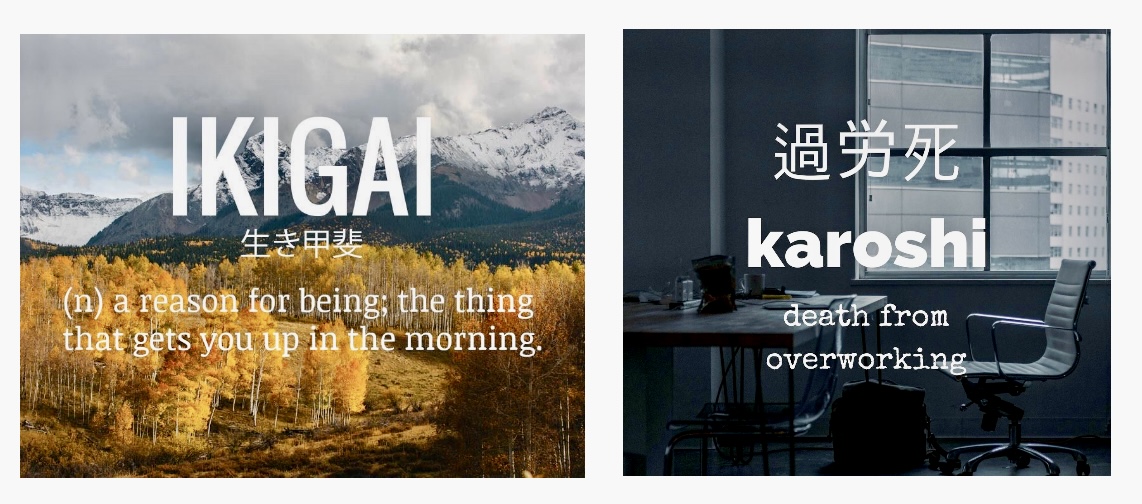
In the lively vocabulary of Japanese, two words capture the opposing dynamics of work and life: “ikigai” and “karoshi.” “Ikigai,” often translated as “a reason for being,” signifies the joy and satisfaction derived from one’s work, a harmonious convergence of passion, vocation, profession, and mission. By contrast, “karoshi” paints a stark picture, embodying the societal ill of death by overwork. There is even a karoshi line, which indicates working 80 hours extra per week above the normal hours. It’s one country, one culture, and two opposite approaches to life and work.
During the last couple of years, we started experiencing some significant change in our ways of working. Two of the most significant factors impacting and influencing our ways of working were: Gen Z entering the workplace and the pandemic.These factors have influenced a shift towards embracing new working models. Now, there is a lot of focus on employees and senior leaders paying more attention to building trust. Life-work harmony and health and wellbeing, are being discussed openly during team meetings. Implementing collaborative technologies allows people to work anywhere and anytime. We have observed a trend where there are fewer discussions on performance and more on value-added contribution.
COVID AS A CATALYST OF CHANGES
This stark duality between “ikigai” and “karoshi” has become a global conversation, especially in light of the COVID-19 pandemic, acting as a catalyst for introspection into the nature and harmony between our personal and professional lives. As the pandemic unfolded, it compelled individuals worldwide to re-evaluate the hours dedicated to work and the quality of life sacrificed in its pursuit. The realisation dawned that life is finite, and the old paradigms of relentless work may not be sustainable. The lines between work and life began to blur, prompting a fundamental shift in how we approach our professional endeavors. Remote work, once a luxury, became a necessity, prompting a deeper examination of how work could co-exist harmoniously with life.
GENERATION CHANGES
The generational landscape also underwent a transformation during this period. The emerging Gen Z workers, a workforce characterised by a desire for autonomy and flexibility, sought not just employment but an alignment of their values with their professional pursuits. They demanded the agency to determine when, where, and how they worked. Virtual collaboration tools became paramount investments for companies looking to attract and retain this new generation of talent. However, it is essential to acknowledge that not all professions can seamlessly transition into remote work, such as drivers, nurses, and warehouse workers, highlighting the need for diverse solutions.
The prevailing mantra, “do what you love and love what you do,” gained renewed significance as people sought meaning and fulfilment in their professional lives. It became evident that work should be a source of satisfaction, not a relentless pursuit that jeopardises one’s well-being.
NEW TRENDS AT WORK
The shifting tides in the professional landscape ushered in new trends focused on working smarter, not harder.
A four-day work week
The idea of a four-day work week, with employees working 35 hours, gained traction. This re-organisation involved shorter meetings, heightened focus, increased autonomy, and a day off each week, rotating between Friday, Wednesday, and Monday. Astonishingly, companies adopting this approach witnessed a 40% increase in revenue with the same personnel, promising additional Full-Time Equivalents (FTEs) if needed. The transition allowed time for adjustment and learning, emphasising a commitment to employee wellbeing and productivity.
Shorter workday
Alternatively, some companies embraced a shorter workday, opting for a Monday to Friday schedule with six hours per day, totaling 30 hours per week. This approach recognised that productivity need not be measured by the number of hours worked but by the quality of the output and the wellbeing of employees.
The rejection of rigid policies in favour of a principle-based approach became a hallmark of progressive workplaces. Empowering individuals to make decisions based on overarching principles rather than prescriptive rules fostered creativity, autonomy, and a sense of responsibility. This marked a departure from traditional, top-down management styles towards a more inclusive and dynamic organisational structure.
Hybrid working
Hybrid working emerged as a dominant model, combining the benefits of remote work with the collaboration found in physical office spaces. This approach granted employees the flexibility to choose when and where they worked, acknowledging the diverse needs and preferences within the workforce. It became a testament to the adaptability and resilience of modern organisations.
Wellbeing
The wellbeing of employees took centre stage as a fundamental aspect of life-work harmony. Companies began to recognise that individuals are talents, not mere resources, and investing in their physical and mental wellbeing reaped long-term rewards. Initiatives promoting life-work harmony, mental health resources, and flexible schedules contributed to a healthier and more satisfied workforce.
PATAGONIA – A UNIQUE WORK CULTURE
There are many companies that have recently started changing or even removing policies and linking their professional cultures with principles. However, there is one global company that pioneered unique and brave wellbeing initiatives many years ago:Patagonia, producers of sport and outdoor clothing. Examining the success story of Patagonia provides a glimpse into a unique work culture that prioritises life-work harmony. In Patagonia, flexibility reigns supreme, with employees empowered to decide when they work. Internal regulations and policies are deliberately minimal, fostering an environment that values individual autonomy and responsibility. This approach underscores the idea that life-work harmony is not just an individual pursuit but a systemic and cultural ethos.

LIFE-WORK HARMONY
In the pursuit of life-work harmony, the traditional norms of the working world are undergoing a profound transformation. The lessons learned from “ikigai” and “karoshi” have given rise to a new era where work is not just a means to an end but an integral part of a fulfilling life. As we navigate these changes, embracing flexibility, autonomy, and a focus on wellbeing, we pave the way for a future where life and work co-exist harmoniously, enriching both our professional endeavours and our personal experiences. The evolving trends and cultural shifts signal a departure from the rigid structures of the past, offering a more nuanced and balanced approach to the intricate dance between life and work.
*****
SUBSCRIBE to Every Day Development and get a complimentary DEVELO COFFEE.
*****
 Every Day Development